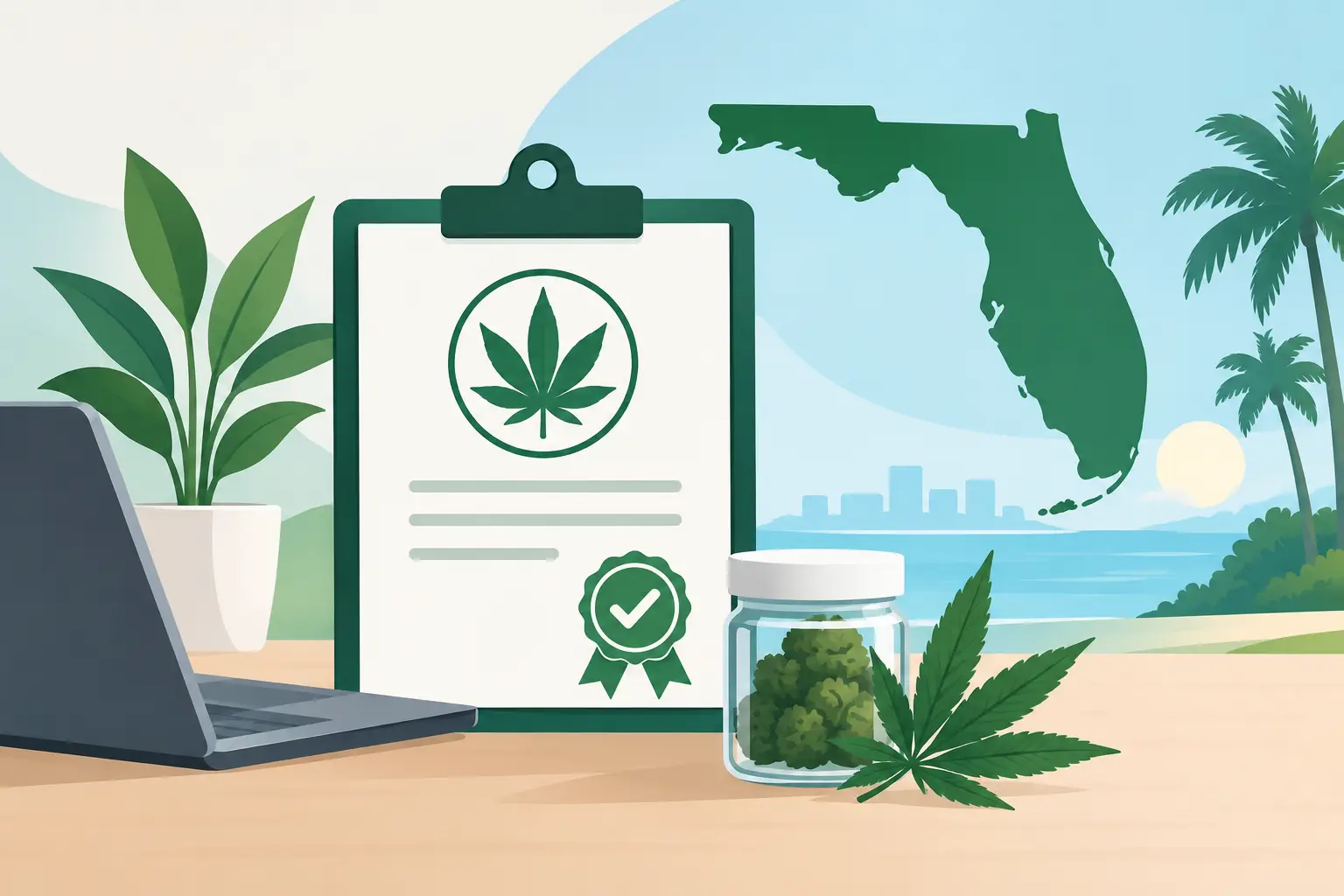
For many patients, the hardest part of seeking medical marijuana care is not the physician visit. It is understanding what happens before and after it. Florida cannabis certification involves a clinical evaluation, physician documentation, state registry steps, and ongoing follow-up. Knowing the distinction between each step can make the process feel far more manageable.
Medical marijuana certification is a regulated healthcare service, not an automatic approval or a substitute for individualized medical care. A qualified physician must evaluate whether a patient may benefit under Florida law, discuss relevant health history, and determine whether certification is appropriate. The physician’s role is to provide clinical oversight while helping eligible patients move through the required Medical Marijuana Use Registry, or MMUR, process.
What Cannabis Certification Means in Florida
Cannabis certification is the physician portion of Florida’s medical marijuana program. During a comprehensive evaluation, a qualified physician reviews your medical history, current symptoms, prior treatments, medications, and relevant records when available. The goal is to understand your condition in context and determine whether medical marijuana may be appropriate as part of your care.
If the physician determines that you qualify, they enter your certification information and medical marijuana orders into the MMUR. This is different from receiving a physical or digital medical marijuana card. The physician certification allows you to move forward in the state system, but the Florida Department of Health is responsible for reviewing the patient application and issuing the identification card.
That distinction matters. A physician can certify an eligible patient, while the state separately processes the patient’s card application. Patients should complete each required step carefully and allow time for state processing before expecting to purchase medical marijuana from a licensed dispensary.
The Patient Journey, Step by Step
The process begins with scheduling an appointment with a physician who is qualified to certify patients in Florida. First-time patients generally need an in-person evaluation. Bring a valid Florida driver license or state identification card if you have one, along with medical records, a medication list, or documentation related to your condition when available. Records can be helpful, but patients should not delay scheduling solely because they do not have every document in hand.
During the appointment, the physician should conduct a meaningful clinical assessment rather than rely on a quick questionnaire. This conversation may include your symptoms, diagnosis history, treatments you have tried, daily functioning, and goals for care. It is also the right time to discuss questions about routes of administration, possible side effects, medication interactions, and safe storage.
If certification is appropriate, the physician submits the required information to the MMUR. The patient then receives instructions to complete the state application, verify identifying information, pay the applicable state fee, and submit a photo if required. State requirements and processing timelines can change, so patients should follow current MMUR instructions and promptly respond to any requests for additional information.
Once the state approves the application, the patient receives confirmation of an active medical marijuana card. Only then can the patient legally purchase medical marijuana from a licensed Florida dispensary. Certification, registry enrollment, and card approval work together, but they are separate parts of the process.
What a Physician Evaluation Should Cover
A proper evaluation is more than a discussion of whether a patient wants access to medical marijuana. Physician-led care considers whether medical marijuana fits the patient’s health needs and whether there are reasons to proceed cautiously.
A comprehensive visit may address the patient’s qualifying condition or comparable medical condition, symptom severity, treatment history, mental health history, current prescriptions, and potential risks. For some patients, the physician may recommend coordinating with another treating provider, particularly when care involves complex conditions or multiple medications.
The conversation should also be practical. Patients deserve clear guidance about how certification works, when renewals are due, what they are responsible for through the state portal, and whom to contact if they move or change physicians. Clear expectations help prevent avoidable interruptions in access.
Medical marijuana is not appropriate for every patient. The physician may decide that another treatment approach is better, request additional records, or recommend that a patient speak with a specialist. That is not a failure of the process. It reflects the clinical judgment that should be part of regulated medical care.
Certification, the MMUR Card, and Renewals
Florida patients commonly use the word “card” to describe the entire process, but there are two timelines to keep in mind. The medical marijuana identification card is issued by the state and must be renewed on the state’s schedule. Physician certification also expires and requires a follow-up evaluation, generally every seven months.
A seven-month renewal is an opportunity for the physician to review how care is going, update the treatment plan when appropriate, and renew certification if the patient continues to qualify. Waiting until the last minute can create unnecessary stress, especially if an appointment is needed before current orders expire.
Eligible established patients may be able to complete renewal visits through telemedicine, depending on their circumstances and current Florida requirements. New patients should expect to begin with the appropriate in-person physician evaluation. A practice should explain which visit type applies before scheduling, along with its fees and any documentation patients should prepare.
State card renewal is a separate responsibility. Even if your physician certification is current, an expired state card can prevent purchases from a dispensary. Setting calendar reminders for both deadlines is one of the simplest ways to maintain continuity of care.
Changing Doctors Does Not Mean Starting Over
Patients change certifying physicians for many reasons. They may relocate within Florida, need a more convenient appointment location, prefer clearer communication, or want a practice that offers more consistent renewal support. A physician transfer allows an established patient to continue care with a new qualified provider.
The new physician still needs to conduct an evaluation and determine whether continued certification is medically appropriate. However, a transfer is not the same as applying to the state from the beginning. In many cases, the new practice can help manage the MMUR transition and explain what information is needed for a smooth change.
Before transferring, patients should confirm the status of their state card, current certification, and any upcoming expiration dates. They should also ask for straightforward information about transfer visit pricing and whether the practice can support future renewals. Transparent answers are especially valuable when timing is tight.
Questions Patients Often Ask
Do I automatically qualify if I have a diagnosis?
No. A diagnosis may be relevant, but qualification depends on a physician’s evaluation under Florida law. The physician considers your health history, symptoms, records, and whether medical marijuana is appropriate for you.
Can I visit a dispensary after my physician appointment?
Not immediately. If you are certified, you must still complete the state MMUR application process and receive approval for your medical marijuana card before making purchases from a licensed dispensary.
How often do I need to see the physician?
Physician certifications generally require renewal every seven months. Your state-issued medical marijuana card has its own renewal timeline, so both dates should be tracked.
What if I am already certified with another provider?
You may be able to transfer to a new qualified physician. The new physician will evaluate you, review your needs, and manage the appropriate MMUR steps if continued certification is indicated.
Choosing a Practice for Ongoing Care
The right practice should make the process understandable without treating it casually. Look for physician-led evaluations, direct answers about pricing, clear renewal policies, and staff who can explain the difference between certification and the state card. Convenience matters, but so does having a healthcare team that approaches your concerns with professionalism and respect.
For patients in Tampa Bay communities, Green Room Health MD provides in-person evaluations, transfers, and seven-month renewals with a focus on clear communication and individualized physician care. Eligible established patients may also have telemedicine renewal options available statewide.
If you are considering certification, begin by gathering the health information you have, writing down your questions, and scheduling time with a qualified physician who will listen. A well-organized visit can replace uncertainty with a clear next step.
Leave a Reply