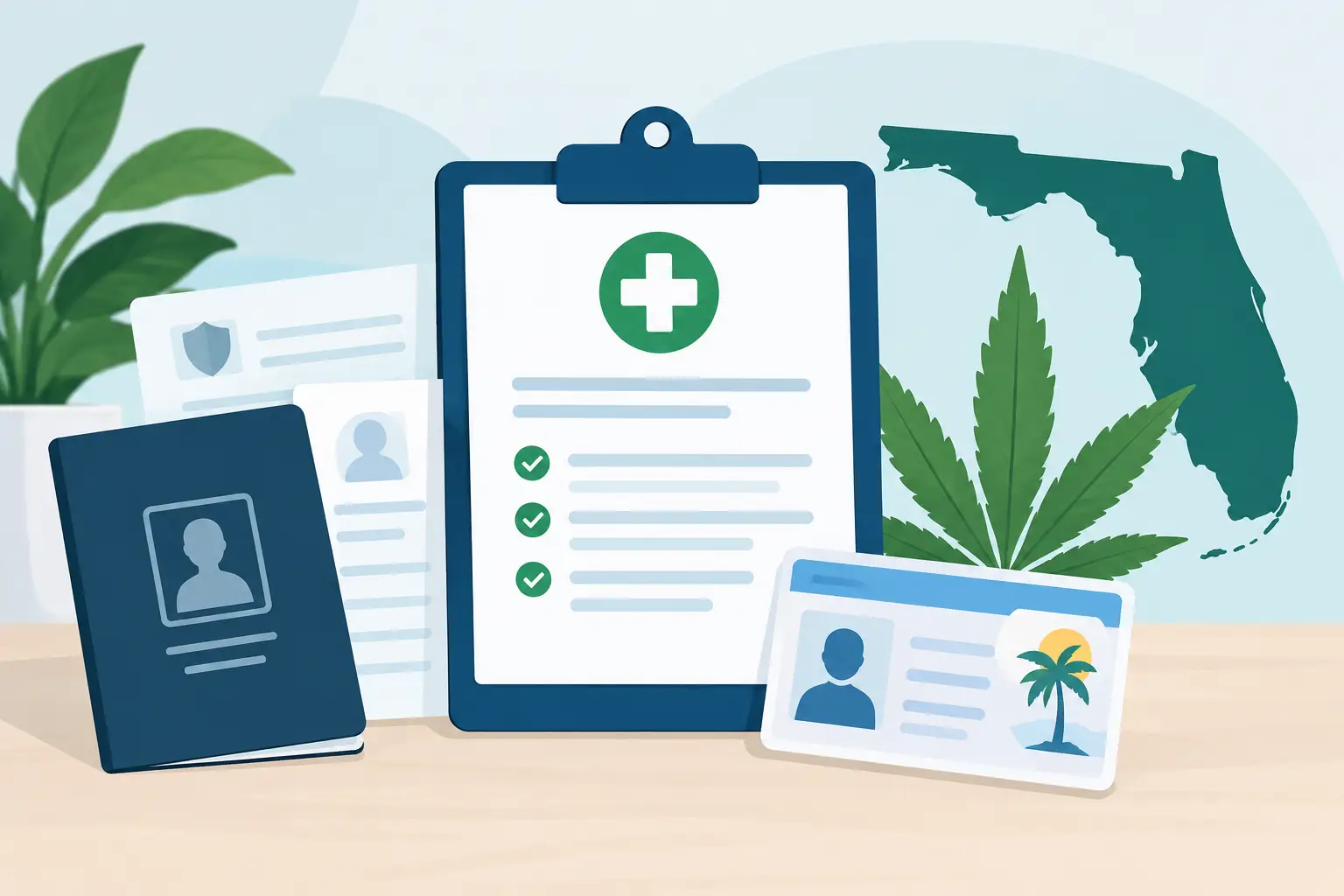
A Florida medical marijuana card involves two connected processes: a physician certification in the Medical Marijuana Use Registry, or MMUR, and a state card application. Knowing the documents needed for Florida medical marijuana card approval before you schedule can prevent avoidable delays and make your visit feel far less stressful.
For most patients, the paperwork is straightforward. The right documents verify who you are, establish Florida residency, and give the physician meaningful clinical context for an individualized evaluation. They do not replace a comprehensive medical assessment, and bringing documents does not guarantee qualification. A qualified physician must determine whether medical marijuana is appropriate for your condition and care plan.
Documents Needed for a Florida Medical Marijuana Card
Your needs may differ slightly depending on whether you are a Florida resident, a seasonal resident, a first-time patient, or an existing cardholder transferring care. Still, most appointments begin with the same core information.
Bring a current government-issued photo ID. For many year-round Florida residents, a valid Florida driver license or Florida identification card is the simplest option because it can confirm both identity and residency. Make sure the name on your ID matches the name you intend to use for your MMUR profile and state application. Differences caused by a recent marriage, divorce, or other legal name change can create administrative issues, so bring supporting documentation if applicable.
You should also have a current email address that you can access. The MMUR uses email for important account and application communications. If you are already registered in the system, use the same email address whenever possible. A working phone number is helpful as well, particularly if the office needs to clarify information before completing your certification.
For first-time patients, medical records related to the condition you want evaluated can be valuable. This may include a diagnosis list, recent office notes, imaging results, hospital discharge paperwork, medication history, or records from a specialist. You do not need to collect every health record you have ever received. The most useful materials show the diagnosed condition, symptoms, previous treatments, and how the condition affects daily life.
If you are bringing four or more types of records, organize them in a folder or bring clear digital copies. This helps keep the evaluation focused on your current needs rather than on sorting paperwork during the appointment.
Proof of Florida residency
Florida residents must meet state residency requirements to apply for a medical marijuana card. A Florida driver license or Florida ID card is often sufficient for permanent residents. If you do not have one, the state may accept other documents that show a Florida residential address, such as certain utility statements, lease documents, mortgage records, government correspondence, or financial documents.
Seasonal residents can also qualify, but their documentation requirements are different. In general, seasonal residents must show that they live in Florida for a portion of the year and provide proof connecting them to a Florida residence. Because acceptable document types and state procedures can change, it is wise to confirm current requirements before your visit rather than relying on an old checklist or a friend’s experience.
Bring original documents or readable copies that clearly display your name, address, and date when relevant. A document with an outdated address, a cropped screenshot, or a bill belonging only to another household member may not be enough to establish residency.
What to Bring to Your Physician Evaluation
The physician evaluation is a healthcare appointment, not simply a paperwork transaction. Your identification and residency documents allow the office to begin the MMUR process, while your clinical information helps the physician assess whether certification is medically appropriate.
Come prepared to discuss your symptoms, past diagnoses, medications, allergies, and treatment history. Be ready to explain what has and has not helped. If another physician, specialist, or hospital has treated the condition, records from that care can give useful context. Patients managing chronic pain, anxiety-related conditions, cancer treatment symptoms, neurological conditions, or other qualifying diagnoses may have very different documentation available. The evaluation should reflect that reality.
If you take controlled medications or have a complex medical history, bring an updated medication list. This supports a safer, more complete review. It also gives the physician an opportunity to discuss potential interactions, impairment concerns, and whether medical marijuana fits responsibly within your overall treatment plan.
After a qualifying evaluation, the physician enters the certification into the MMUR. The physician certification is necessary before you can submit or renew your state identification card application. These are separate steps, and each has its own timing and requirements.
Documents for the State Card Application
Once your physician certification is active in the MMUR, you will complete the state card application. The state generally needs confirmation of your identity and residency, along with a photograph and the required application payment. Patients with a current Florida driver license or Florida ID may be able to use the state’s available photo records rather than submitting a separate image, depending on the application process.
If you need to provide a photo, use a clear, recent image that meets the state’s specifications. Avoid heavily filtered photos, dark images, hats, sunglasses, or pictures where your face is partly obscured. A rejected photo can slow an otherwise complete application.
Review every detail before submitting. Your legal name, date of birth, address, and email should align with the information in the MMUR. Small mismatches are common causes of avoidable follow-up. Keep copies of submitted residency documents and confirmation details for your records until your card arrives.
Renewal and Transfer Documents
Florida patients manage two different timelines. The state medical marijuana card must be renewed annually, while physician certifications generally require renewal every seven months. Missing either deadline can interrupt your ability to obtain products through a licensed dispensary.
For an annual card renewal, you will usually need to confirm that your identification, address, photo, and residency information remain current. If you have moved, changed your name, or replaced an expired Florida ID, address those updates early. Do not assume an old application automatically reflects your current information.
For a seven-month physician recertification, bring or have available any updates to your medical history, medication list, symptoms, and treatment results. An established patient may be eligible for telemedicine renewal when permitted under Florida law and when the physician determines it is appropriate. Some situations still require an in-person visit, including circumstances where a clinical examination or updated assessment is needed.
Patients transferring from another marijuana physician should bring a photo ID and any relevant medical documentation, especially if their diagnosis, treatment plan, or medication regimen has changed. If you have an existing MMUR account or card, have those details available. A transfer visit is an opportunity for the new physician to review your history and assume certification care, not merely copy a prior recommendation.
A Simple Way to Prepare Before You Schedule
Set aside ten minutes to gather your photo ID, current contact information, and any medical records that explain the condition you want evaluated. Then check whether your Florida address is current across your ID, records, and MMUR account. If you are a seasonal resident or your identification does not show a Florida address, collect residency documents early so you are not scrambling on appointment day.
At Green Room Health MD, physician-led evaluations are designed to give patients clear guidance through both the clinical review and the MMUR process. If you are unsure whether a document is sufficient, ask before your appointment. A quick question beforehand can help your visit stay focused on what matters most: thoughtful, individualized care and a clear path forward.
Leave a Reply